
What Is Lead Generation? A Simple Guide for Marketers
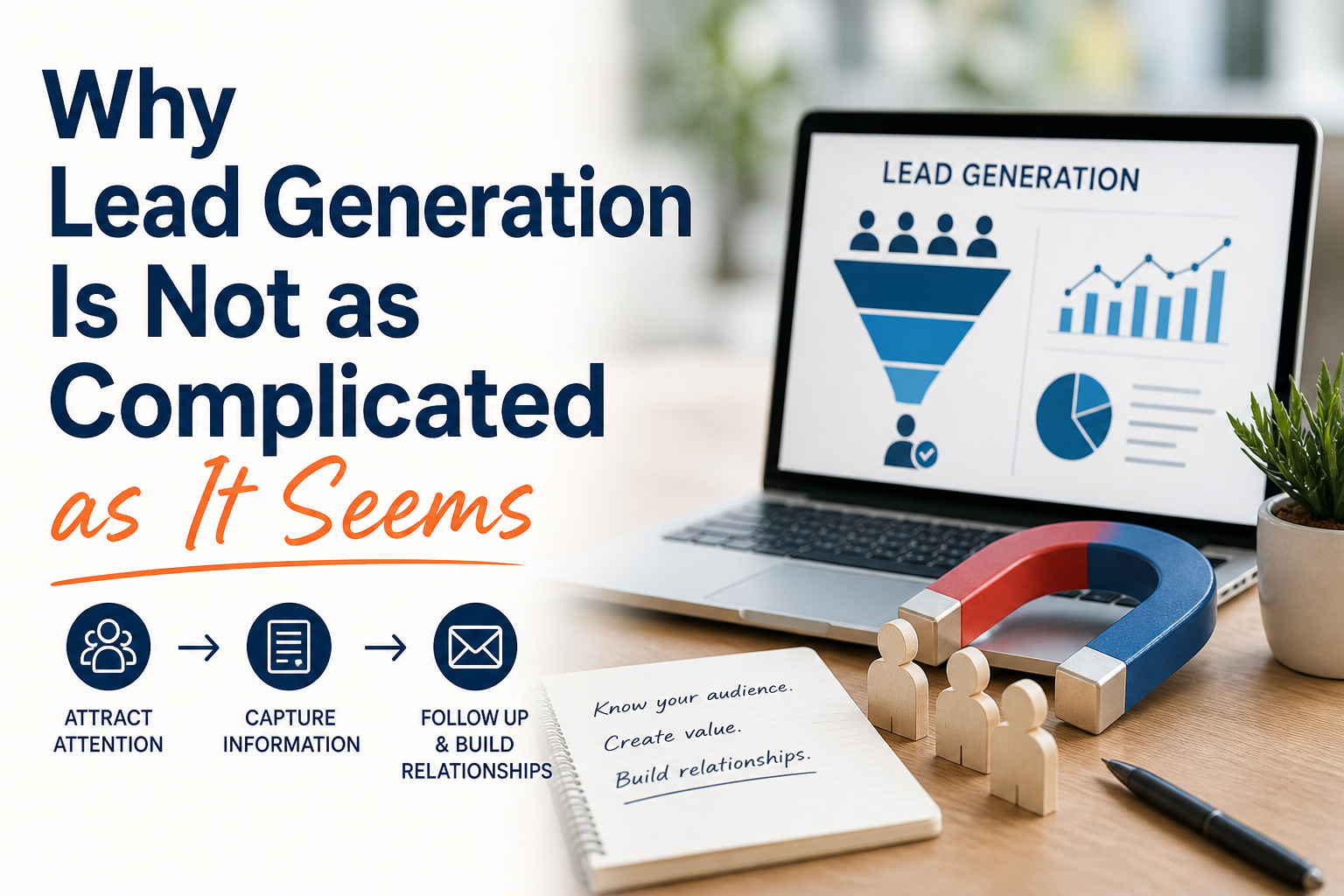
Why Lead Generation Is Not as Complicated as It Seems
Lead generation is one of those marketing terms that can sound more complicated than it actually is.
What I have learned is that it becomes much more manageable when you simplify it. At its core, lead generation is really about understanding who you are trying to reach and creating opportunities to connect with them over time.
Instead of trying to build a perfect system right away, you can focus on building something intentional and improving it over time.
What Lead Generation Actually Means
Lead generation is the process of attracting people to your business and capturing their interest so you can continue the conversation later.
A “lead” is simply someone who has shown some level of interest in what you offer. That could mean signing up for emails, downloading a resource, registering for an event, or taking some other action that gives you a way to follow up.
So in simple terms:
Lead generation = attracting attention and capturing interest
A lead = someone who has taken a step toward your business
A Simple Example
Think about a store like Wegmans. Someone walking into the store is just a customer browsing. But if that same person signs up for rewards, emails, or digital coupons, there is now a way for the company to continue engaging with them after that visit.
That same idea applies across almost every industry. The goal is not just to get attention for one moment, but to create an opportunity for an ongoing relationship.
Why Lead Generation Matters
Even if you have a great product or service, most people are not ready to make a decision immediately. Lead generation creates a way to stay connected while people continue researching and comparing options.
What stands out to me about lead generation is that it shifts marketing from a one-time interaction into a longer-term process. Instead of hoping someone converts instantly, you are building familiarity and trust over time.
Research supports this idea as well. According to HubSpot’s State of Marketing research, businesses that focus on nurturing leads over time tend to generate more sales-ready opportunities than businesses that rely only on immediate conversions.
Understanding Your Ideal Customer Profile (ICP)
One of the biggest lessons I have learned with lead generation is how important it is to clearly understand your ideal customer profile, or ICP.
At first, it is easy to think that getting more leads should always be the goal. But over time, I realized that not every lead is equally valuable. If your audience is too broad, you can end up spending a lot of time trying to market to people who are unlikely to actually convert.
What I have found is that the more specific you can get about who your ideal customer is, the more effective your lead generation becomes.
Having that clarity helps businesses create better messaging, target the right communities, and focus more on qualified leads instead of trying to appeal to everyone at once.
How Lead Generation Works
Even though there are many different strategies, most lead generation follows the same general process:
- Attract attention
- Capture information
- Follow up and build the relationship
Breaking it down this way makes the process feel much more practical and easier to improve over time.
Attracting Attention
The first step is simply getting in front of the right audience.
This can happen through:
- Blog content
- Social media
- Events and conferences
- Paid advertising
- Search engines
The goal at this stage is not necessarily to sell immediately. It is to create awareness and attract people who fit your target audience.
Capturing Information
Once you have someone’s attention, the next step is giving them a reason to engage further.
This is where forms, landing pages, and lead magnets come into play. A lead magnet is something valuable you offer in exchange for contact information.
Some common examples include:
- Guides or ebooks
- Templates or checklists
- Webinars
- Free trials or discounts
This is the point where interest turns into an actual lead.
Following Up
Getting the lead is really only the beginning.
Following up consistently is what actually helps move someone closer to becoming a customer. This can happen through email marketing, educational content, or direct outreach depending on the business.
The goal is to continue providing value and building trust instead of immediately pushing for a sale.
A Real Example: Why Audience Matters
One experience that changed how I think about lead generation was when I was helping sell an online finance course for teenagers at a conference specifically for homeschool families.
Going into it, I expected the audience to be smaller because the product was geared toward a very specific demographic. What surprised me was how many people were genuinely interested in the course.
The reason became clear pretty quickly: the audience was already highly aligned with the product. We were not trying to convince random people to care about it. We were speaking directly to a community where the offer already made sense.
That experience reinforced an important point for me: if you can tap into a community that gathers either in person or online, it can lead to much more qualified leads.
When your audience is already closely connected to what you offer, the conversations become more natural and the overall process becomes much more effective.
What Research Says About Lead Quality
This idea of prioritizing lead quality over simply trying to reach the largest audience possible is also supported by research. According to research published by HubSpot and Salesforce, businesses with clearly defined target audiences and more personalized marketing strategies tend to see higher conversion rates and more efficient lead generation performance.
Better targeting often matters more than simply generating more traffic.
What Makes Lead Generation More Effective
Clear Value
People need a reason to engage. Offers that are specific and genuinely useful tend to perform much better than vague messaging. When people immediately understand what they are getting and why it matters to them, they are more likely to take action.
Relevance
Your messaging needs to align with the audience you are trying to reach. This is where having a strong ICP becomes extremely important.
Simplicity
The easier it is for someone to take the next step, the more likely they are to do it. Too many steps or unnecessary friction can quickly reduce conversions.
Consistency
Lead generation is usually not something that works overnight. Consistently creating content, refining messaging, and learning from results is what leads to stronger long-term growth.
Final Thoughts
What I have learned about lead generation is that it is much less about trying to reach everyone and much more about reaching the right people.
Once you understand who your audience is and where they already spend their time, the process becomes far more intentional and effective. Instead of relying on guesswork, you are building a system around qualified leads and real connections.
Over time, those small improvements and better targeting decisions are what make lead generation a much more effective part of marketing overall.